

Is your Child’s Prescription Getting Stronger Every Year?
Myopia is more than just needing glasses—it’s a physical change in your child's eye that requires specialized care.
What Causes Myopia and How Does it Affect your Child?
Myopia, also known as nearsightedness, is a vision condition where close objects appear clear, but distant objects are blurry. It occurs when the eyeball grows too long or the cornea is too curved. Instead of focusing precisely on the retina, light focuses in front of it. In children, this often leads to progressive myopia, where the eye continues to stretch and vision worsens annually.
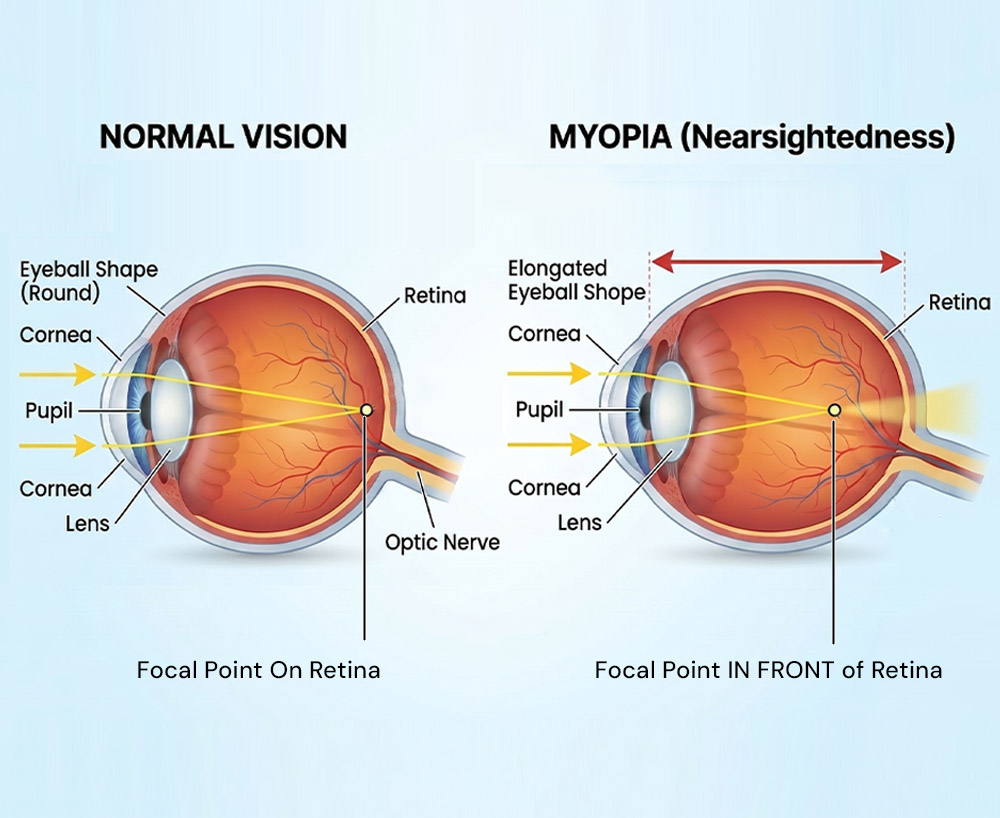
Is it a habit, or is it myopia? If you notice these myopia symptoms, it may be time for a specialized assessment.
01. The Physical "Red Flags" for Myopia
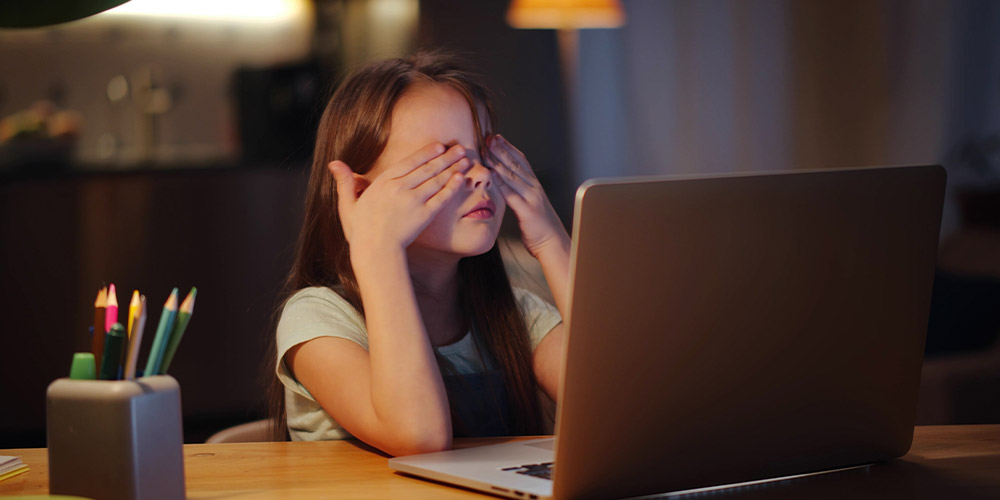
- Squinting at the TV: Is your child leaning forward or narrowing their eyes to see the screen?
- The "Close-Up" Habit: Are they holding books, tablets, or phones unusually close to their face?
- Frequent Eye Rubbing: Often mistaken for allergies, this is frequently a sign of significant eye strain.
- Excessive Blinking: An unconscious attempt to clear up blurry distance vision.
02. Behavioral & Academic Signs
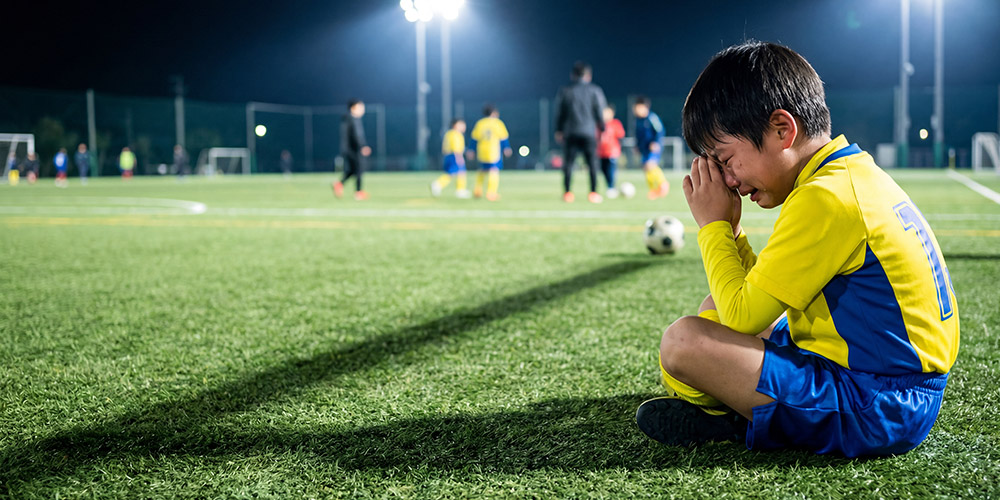
- "I Can’t See the Board": This is the classic sign that a child’s distance vision is failing.
- Losing Interest in Sports: If your child is suddenly "clumsy" or missing the ball in baseball or soccer, they may simply be unable to track it.
- Short Homework Attention Span: Myopia causes rapid visual fatigue, making kids give up on tasks that require focus.
- Headaches & Tired Eyes: Does your child complain of tension headaches or "heavy eyes" after a day at school?
Understanding the 3 Types of Myopia
Not all nearsightedness is the same. Recognizing the "type" is the first step in eye care for myopia.
01. School-Age Myopia (Common)
Usually develops between ages 6–14, often becoming noticeable when a child starts school and has trouble focusing or keeping up in class.

The Parent's Perspective: Your child saw fine last year, but now they are requesting the front row in class.
The Risk: It usually gets worse every year until the early 20s.
02. Progressive Myopia ("Red Flag")
The key red flag is noticing your child’s prescription increase significantly every 6 to 12 months.
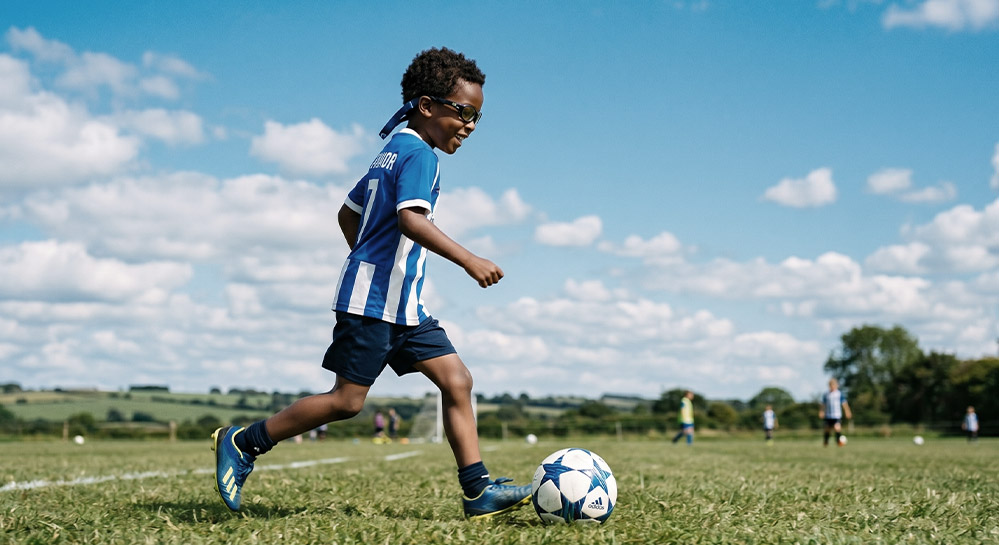
The Parent's Perspective: You feel like you’re buying new, thicker glasses every time you visit the doctor.
The Risk: This is what myopia management is designed to treat. If left unchecked, it leads to High Myopia.
03. High Myopia (Rare)
Affecting approx. 10% of myopia patients—the eyeball has stretched significantly (usually a prescription higher than -5.00 or -6.00).
The Parent's Perspective: Very thick lenses and a high dependency on correction.
The Risk: High myopia dramatically increases the lifetime risk of retinal detachment and glaucoma. Our goal is to intervene before a child reaches this stage.
Advanced Myopia Treatment Options

Ortho-K Overnight Lenses
"Braces for the eyes"—worn while sleeping so no glasses are needed during the day.
Dr. Kevin Chan, OD, FAAO talks about the importance of treating myopia in children early
Ask Us Myopia Questions—FAQs

Find out which treatment is best for your child's unique eye growth.
