

How to Keep Kids Getting Daylight Through the Winter
When the Sun Sets Before Dinner
Daylight saving time ended on November 1. For a lot of families, that means it’s dark by the time school pickup, sports practice, or homework wraps up. The bike rides and park visits that filled September evenings tend to fade without anyone deciding to stop them.
That shift is normal, and it’s also worth a little planning. Time outdoors is one of the most practical habits parents can encourage for healthy eye development, and it’s much easier to keep going in winter if you know where the daylight is in your week.
Why Daylight Matters for Growing Eyes
Research suggests that about two hours outdoors each day can help lower a child’s risk of developing myopia (nearsightedness). Some studies suggest it may also help slow progression in children who are already nearsighted.
Scientists are still working out exactly why. Two explanations come up most often. Daylight is much brighter than indoor lighting, even when it’s cloudy. Being outside also means children spend more time looking at things far away instead of at a page or screen a foot from their face.
Because myopia usually starts in the school years, while the eyes are still growing, these years are when everyday habits can make a real difference.
What Tends to Change in Winter
Shorter afternoons are the obvious change, but they aren’t the only one. Cold or wet weather makes indoor play the default. Dark evenings often mean more time on tablets, consoles, and TV. Then winter break arrives, with long days at home and fewer set routines.
None of this means winter is bad for kids’ eyes. It just means outdoor time is less likely to happen by accident, so it helps to plan for it.
Ways to Fit Outdoor Time Into Winter
Start with mornings. They’re now the brightest part of most school days. Walking to school or the bus stop, or getting there ten minutes early to play outside, adds daylight without changing much else.
Weekends carry more of the load in winter. A Saturday morning at the playground, a hike, or running errands on foot can make up for the short weekday afternoons.
It also helps to give outdoor time a regular slot. Families tend to stick with something like “we walk the dog together after Sunday lunch” far longer than a general goal to go outside more.
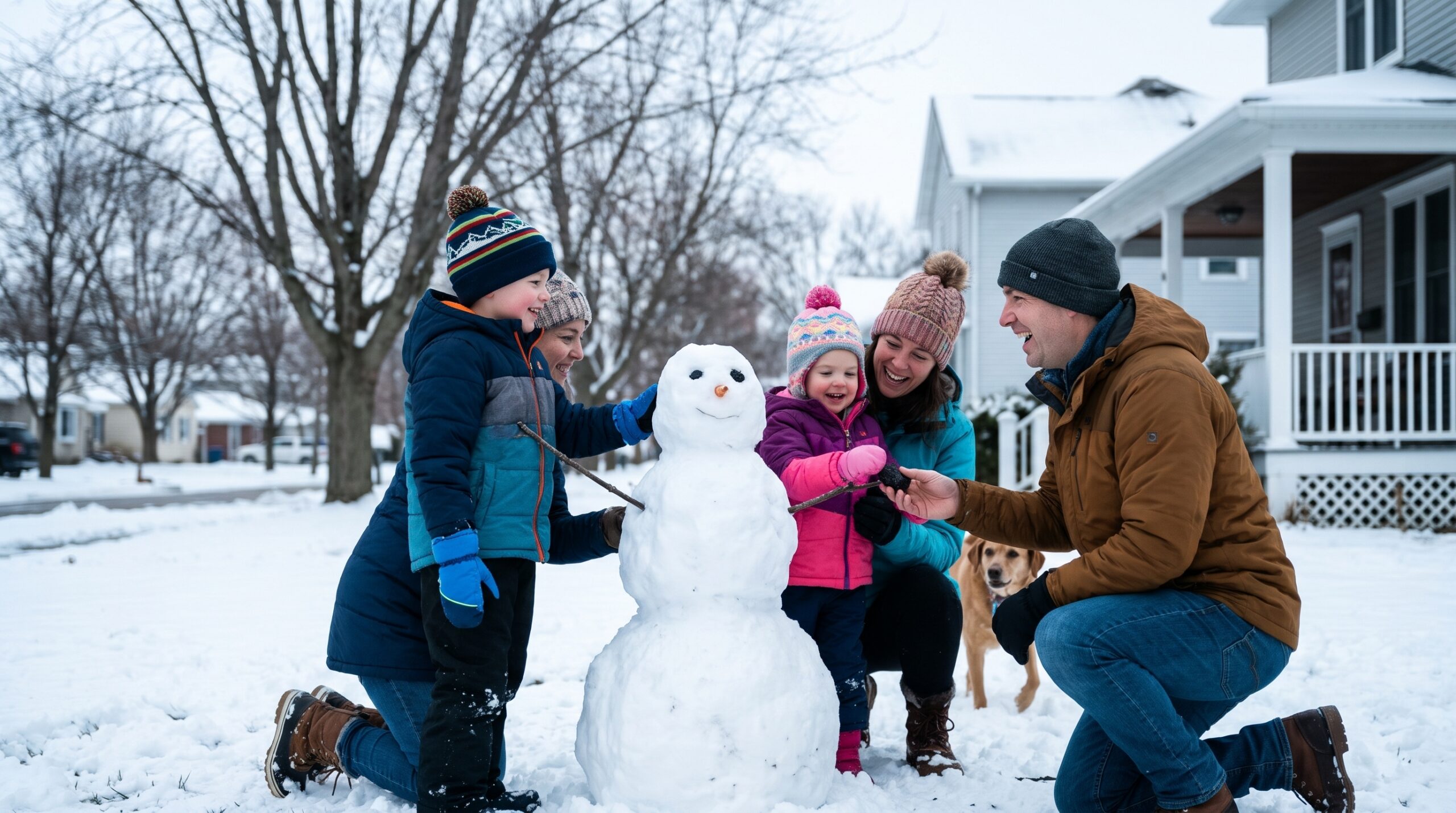
Lean into the season, too. Sledding, building a snowman, ice skating, and winter nature walks all count, and many kids are happy to stay out longer than their parents in the cold. Good boots, gloves, and a warm hat make that much easier.
Don’t wait for sunshine, either. Even a gray, overcast day gives children far more light than they’d get indoors.
Every family’s schedule and climate looks different, so pick one or two of these that suit your week and build from there.
Habits for the Days You Stay In
Some days, outside just won’t happen. On those days, encourage short breaks during homework, reading, and screen time. Looking across the room or out the window for a minute gives the eyes a rest from close focus. Try not to schedule a long gaming session straight after a long stretch of homework. Keeping screens off at meals and in the hour before bed helps as well.
More Than a Stronger Prescription Each Year
Outdoor time is good for every child. If your child already has myopia, though, and especially if their prescription goes up at each eye exam, there’s more you can do than replace their glasses each year.
Myopia is now recognized as a progressive eye condition, and there are evidence-based treatments designed to slow it while a child’s eyes are still developing. These include overnight contact lenses, daytime soft contact lenses, prescription atropine eye drops, and myopia-control glasses.
Treehouse Eyes practices use the Treehouse Vision System, a clinical protocol that measures how your child’s eyes are growing, guides the choice of treatment, and tracks progress at regular visits. In a large-scale Treehouse Eyes clinical study, 78% of children in treatment showed no additional myopia progression in their first year.
Signs It May Be Time for a Myopia Evaluation
Consider booking a comprehensive myopia evaluation if your child:
- Needs a stronger prescription from year to year
- Squints or has trouble seeing the board at school
- Sits close to the TV or holds a phone or tablet close to their face
- Mentions headaches or tired eyes after schoolwork
- Has one or both parents who are nearsighted
Winter can be a convenient time to come in. If your family has FSA or HSA funds, it’s worth checking whether you have a balance to use before the end of the year.
Looking Ahead to Spring
A few mornings outside, some weekend plans, and the right winter gear can keep your child’s outdoor time going until the longer days come back.
If your child is already nearsighted, there’s no need to wait for spring to find out how their eyes are changing. Knowing that now gives you more options for protecting their vision for life.
Shorter days are a good time to check in on your child’s eyes. Before winter break, schedule a comprehensive myopia evaluation with a Treehouse Eyes practice, or take the FREE Myopia Risk Assessment at https://treehouseeyes.com/risk-assessment-form/.
