

Myopia Management in Kirkland, Washington
Helping kids see clearly and reducing their risk of serious eye diseases.
What is Myopia?
Myopia, or nearsightedness, is a common vision condition where distant objects appear blurry because the eye grows slightly too long, causing light to focus in front of the retina instead of directly on it.
If your child is squinting at the board, sitting closer to screens, or needing a stronger glasses prescription each year, it may be time to look beyond vision correction alone.
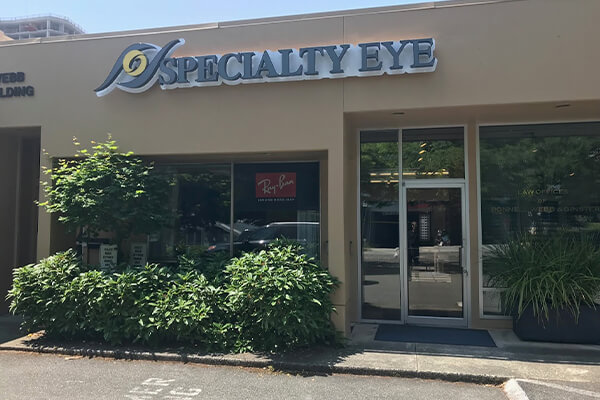
Specialty Eye offers myopia management in Kirkland, WA, to help slow the progression of childhood nearsightedness. Your child’s eye doctor can track their prescription and eye growth, then recommend treatment based on their needs.
What Is Myopia Management?
Myopia, also called nearsightedness, makes distant objects look blurry. In many children, it progresses as the eye grows longer. Higher levels of myopia increase the risk of certain eye conditions later in life, which is why monitoring childhood progression matters.
Myopia management goes beyond correcting blurry vision with stronger glasses. The Kirkland team offers options including MiSight® 1 day contact lenses, overnight ortho-k lenses, prescription eye drops, and Stellest® glasses.
We select treatment based on your child’s prescription, eye growth, age, eye health, and individual needs. Regular monitoring helps the eye doctor decide whether to keep the plan the same or adjust it.
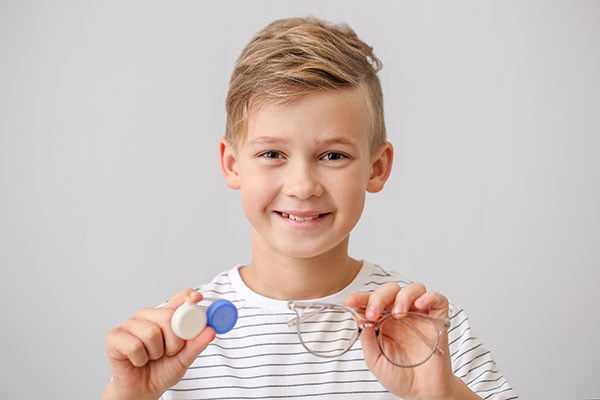

What Are the Signs of Myopia in Children?
Children may not realize their distance vision has changed. Parents often notice the signs first.
- Squinting to see distant objects
- Sitting close to screens or the classroom board
- Blurry vision during school, sports, or play
- Frequent headaches or eye rubbing
If these signs sound familiar, an eye evaluation can determine whether your child has myopia and whether it is time to consider myopia management.
How Does Myopia Treatment for Children Work?
Parents wondering how to treat myopia in children have more options than simply increasing a glasses prescription. Myopia management focuses on slowing progression and monitoring eye growth as your child grows.
Treehouse Eyes doctors in Kirkland may recommend prescription eye drops, specially designed glasses, daytime soft contact lenses, or overnight contact lenses.
Axial-length measurements track the length of the eye from front to back, giving the eye doctor another way to monitor change over time.
How Do Ortho-K Lenses Work?
Ortho-k is an overnight contact lens option for childhood myopia management. These specially fitted gas-permeable lenses gently and temporarily reshape the cornea while your child sleeps.
After you remove the lenses in the morning, that temporary change can provide clearer daytime vision without regular glasses or daytime contacts. Ortho-k lenses used for myopia management can also help slow the eye growth associated with childhood myopia.
Because your child sleeps in these lenses, proper fitting, cleaning, handling, and follow-up care are important. Their eye doctor will determine whether ortho-k is appropriate based on their prescription, eye health, corneal measurements, and other clinical findings.

MiSight® 1 Day Contact Lenses for Children in Kirkland
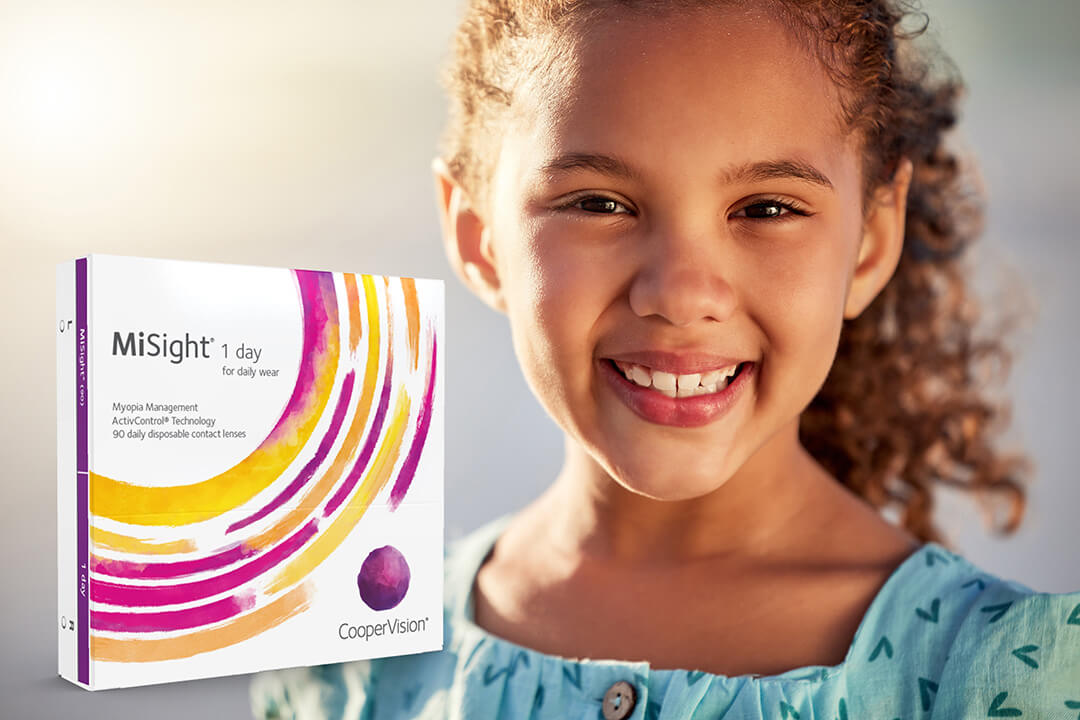
MiSight® 1 day by CooperVision® is a daily disposable soft contact lens that corrects nearsightedness while helping slow myopia progression. Its ActivControl® technology combines clear vision correction with an optical design for myopia control.
MiSight® 1 day is FDA-approved for children who are 8 to 12 years old when treatment begins and meet its prescribing criteria. Children discard each lens after removal, so they start each day with a fresh pair.
At Specialty Eye in Kirkland, the care team may use MiSight® as part of a broader myopia management plan and monitor progress on an ongoing basis.
Stellest® Lenses for Childhood Myopia
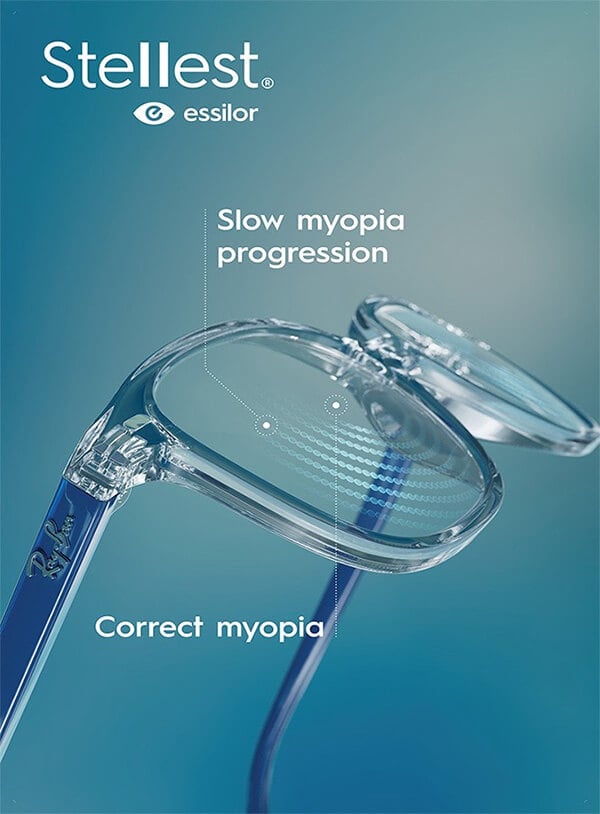
Stellest® lenses offer a glasses-based option for childhood myopia treatment. They correct distance vision while using a specialized lenslet design intended to help slow myopia progression.
The FDA authorized Essilor Stellest® lenses in September 2025 for children ages 6 to 12 when treatment begins. They are the first eyeglass lenses authorized by the FDA in the United States to correct myopia and slow its progression in this age range.
For children who are not ready for contact lenses, Stellest® provides a familiar glasses-based option. Follow-up care and axial-length monitoring help the doctor track eye growth and prescription changes.
How Can Prescription Eye Drops Help?
Treehouse Eyes may use low-dose atropine prescription eye drops as part of childhood myopia management. People typically use these drops at night to help slow eye growth. Because they do not correct blurry distance vision, your child may still need glasses or contact lenses.
Your child’s eye doctor can decide if prescription eye drops suit your child and can explain how your child should use them and what monitoring your child needs.
Why Choose Treehouse Eyes for Myopia Care in Kirkland?
Myopia management is ongoing pediatric eye care, not a one-time prescription change. Regular visits help your child’s doctor monitor eye growth and determine whether treatment still meets their needs.
At the Kirkland location, axial-length technology supports that monitoring. Specialty Eye is a Treehouse Eyes provider in Kirkland, giving local families access to pediatric myopia care backed by the broader Treehouse Eyes network.
If you are wondering how to manage your child’s myopia, a consultation can provide clearer answers. The doctor can review how your child’s eyes are changing, discuss available treatments, and explain what follow-up may involve.

Does Myopia Management Work?
Myopia management aims to slow progression, but no treatment can guarantee that a child’s prescription or eye growth will stop changing.
Treehouse Eyes reports that 78% of children using its treatment protocol showed no additional myopia progression during their first year of treatment. Individual results vary, so regular measurements help the eye doctor track how your child is responding and adjust treatment when appropriate.
Is My Child at Risk of Myopia?
Parents often ask how to prevent myopia in children. There is no guaranteed way to prevent myopia because family history, eye growth, and environmental factors can all play a role. Healthy visual habits and regular eye care are important, but they cannot guarantee that myopia will not develop.
Parents also ask when to start myopia management. There is no single age or treatment that is right for every child. The decision depends on your child’s prescription, how quickly it is changing, eye measurements, and the doctor’s findings.
Treehouse Eyes offers a Myopia Risk Assessment to help parents identify factors worth discussing with an eye doctor.
What Our Patients Say:


I have been visiting Specialty Eye in Kirkland for about a year, and yesterday there was a scheduling mistake: I was booked in Bellevue instead of Kirkland. Because of this, my regular doctor couldn’t see me, but I was referred to Dr. Kristi M. Kading, and I’m so glad it happened.
Dr. Kading is an attentive and thorough professional. She takes interest in every detail, explains everything clearly, and pays close attention to nuances. It was truly a high-quality appointment, and I’m very grateful to her!


Myopia Care for Kids and Families in Kirkland
Treehouse Eyes provides pediatric myopia care for Kirkland families and those from nearby communities, including Redmond, Bellevue, and Bothell.
If your child has myopia, needs stronger prescriptions from year to year, or has trouble seeing clearly at a distance, request a free myopia consultation. The team can evaluate your child’s vision, measure eye growth, and explain which myopia management options may be appropriate.
