

Myopia Management in Crofton, Maryland
Helping kids see clearly and reducing their risk of serious eye diseases.
Is your child squinting at the classroom board or struggling to follow the ball during sports? These may be signs of myopia, also called nearsightedness.
At Crofton Family Eye Care, your local Treehouse Eyes provider, we help families in Crofton, MD, manage childhood nearsightedness with treatment options designed to slow progression. We'll review your child's vision, discuss treatment options, and help you decide on the next step.
What Is Myopia, and How Is It Treated?
Nearsightedness makes distant objects look blurry while close-up activities, such as reading, may remain clear.
Myopia usually develops when the eye grows too long, causing light to focus in front of the retina instead of on it. It often begins in childhood and can become stronger as the eyes grow.
Regular glasses and contact lenses correct blurry vision. Myopia management uses specially designed treatments to help slow progression, rather than simply updating your child's prescription.
Slowing progression matters because higher levels of nearsightedness increase the risk of eye conditions, including glaucoma and retinal detachment, later in life.
Treatment approaches include MiSight® daily contact lenses, overnight orthokeratology (ortho-k) lenses, and low-dose atropine eye drops. Your child's eye doctor will consider their age, prescription, eye health, and daily routine when discussing suitable options to treat your child's myopia.
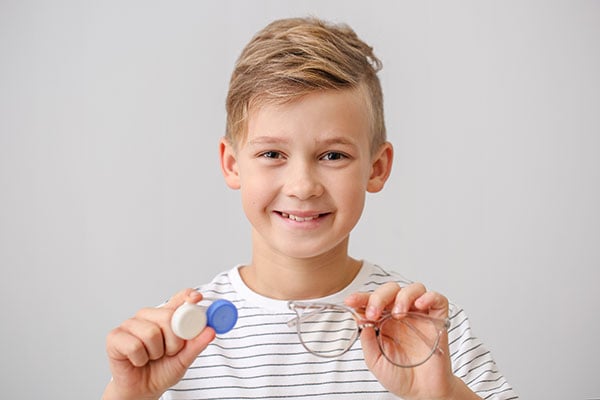

What Are the Signs of Nearsightedness in Children?
Your child might tell you they can see just fine, even while squinting at the TV from across the room. Kids often adjust to blurry vision without realizing anything has changed.
Watch for signs such as:
- Squinting to see distant objects or read the classroom board
- Sitting close to the TV or holding screens near their face
- Having trouble seeing clearly during sports
- Complaining of headaches or rubbing their eyes often
These signs can have several causes. An eye exam can help find out whether nearsightedness is affecting your child's vision and what care they may need.
Myopia Treatment Options for Children in Crofton, MD
Your child's treatment starts with a closer look at their vision. We'll review their prescription history, eye health, and how their eyesight has changed before discussing suitable options.
Treatment options may include myopia-control glasses, specially designed contact lenses, or prescription eye drops. Each works differently, and your child's doctor will recommend an approach based on their vision, eye health, and daily routine.
An important part of monitoring myopia is measuring axial length, or the distance from the front to the back of the eye. Tracking this measurement alongside prescription changes helps us assess eye growth and how your child is responding to treatment.
During a consultation, your child's eye doctor can review their vision history, discuss suitable treatments, and explain the follow-up care involved. If you're looking for a kids' eye doctor in Crofton, MD, this is a practical place to start.


MiSight® Contact Lenses to Slow Myopia in Kids
MiSight® 1 day contact lenses by CooperVision help children see clearly while slowing the progression of nearsightedness. These FDA-approved soft contact lenses are for eligible children ages 8 to 12 when treatment begins.
MiSight® lenses use ActivControl® technology, a special optical design that corrects blurry distance vision while helping slow the eye growth associated with worsening myopia.
Your child starts each day with a fresh pair and disposes of the lenses after wearing them. There's no overnight cleaning or storage, although safe handling and good hygiene remain essential.
At Crofton Family Eye Care, we'll assess your child's prescription, eye health, and readiness for contact lenses. If MiSight® is suitable, the team can explain how to insert and remove the lenses, what safe daily wear involves, and when to schedule follow-up visits.
Interested in MiSight® for your child? A consultation can help you find out whether they're eligible and ready for contact lenses.
Stellest® Glasses to Help Slow Myopia Progression
Stellest® lenses by Essilor help children see clearly while slowing worsening nearsightedness. These FDA-authorized prescription eyeglass lenses are for eligible children ages 6 to 12 when treatment begins.
Stellest® lenses contain tiny, specially arranged lenslets that change how light focuses in the eye. This design aims to help slow the eye growth linked to worsening nearsightedness.
For children who prefer glasses or aren't ready for contacts, Stellest® offers a familiar way to receive treatment. They provide clear distance vision while helping manage progression.
At Crofton Family Eye Care, we'll review your child's prescription, eye health, and daily activities to determine whether Stellest® may be appropriate. Regular visits help us check their vision and monitor changes in eye length.
If your child prefers glasses, ask our Crofton team whether Stellest® lenses may be a suitable treatment option.

Why Choose Treehouse Eyes for Myopia Care in Crofton?
At Crofton Family Eye Care, your child's myopia care follows the Treehouse Eyes approach, combining detailed eye measurements with treatments designed to slow progression.
Your child's doctor will explain the findings in plain language and discuss what they mean for your child's treatment. You'll know what to expect at follow-up visits and have time to ask questions along the way.
How Can You Slow Worsening Nearsightedness in Kids?
Myopia-control glasses, specially designed contact lenses, and prescription eye drops can help slow worsening nearsightedness in some children. The right choice depends on your child's vision and individual needs.
Treatment works over time, so regular follow-up visits matter. Your child's eye doctor can compare measurements, check eye health, and review whether the current approach remains suitable.
Your child's prescription may still increase during treatment. The goal is to slow progression, which may reduce the likelihood of developing very high nearsightedness. Results vary, and no treatment can guarantee that progression will stop.

Is Your Child at Risk of Developing Myopia?
Wondering whether your child is more likely to develop nearsightedness? Our quick Myopia Risk Assessment is a simple place to start.
Myopia often runs in families. Children with nearsighted parents may have a higher risk of developing it. Spending less time outdoors and doing frequent close-up activities may also contribute.
Regular outdoor time may help lower the chance of developing nearsightedness, although it cannot guarantee prevention.
The assessment can help identify risk factors to discuss with your child's eye doctor. It cannot diagnose myopia or replace a comprehensive eye exam.
Myopia Consultations for Children in Crofton, MD
Crofton Family Eye Care provides pediatric eye care in Crofton, MD, for families in Crofton, Bowie, Gambrills, Odenton, and surrounding communities.
If you're looking for a pediatric eye doctor in Crofton, Maryland, our Treehouse Eyes team can help you learn what myopia management involves and which options may suit your child.
You don't need to have all the answers before making an appointment. Bring your child's current glasses prescription, if available, and any questions or concerns about their vision. Schedule a consultation to learn which myopia treatments may be right for your child.

The Treehouse Eyes Approach to Myopia Management
Treehouse Eyes brings together eye doctors who focus on managing childhood nearsightedness. Its approach combines treatment training, detailed eye measurements, and ongoing monitoring to support decisions about children's vision.
At Crofton Family Eye Care, we aim to make visits comfortable for children and conversations clear for parents. You'll know what the doctor recommends, why it matters, and what to expect as treatment continues.
What Our Patients Say:


Where to Find Us
Treehouse Eyes - Crofton
