

Myopia Treatment and Management in Colorado Springs
Helping kids see clearly and reducing their risk of serious eye diseases.
When your child starts squinting at the board, moving closer to screens, or needing stronger glasses year after year, clearer vision is only part of the concern. Myopia, or nearsightedness, often progresses as a child's eyes grow.
At Ridge View Optometry, a Treehouse Eyes provider in Colorado Springs, we offer myopia treatment for children that focuses on helping them see clearly now while managing how their nearsightedness changes over time. Myopia management cannot cure or reverse nearsightedness, but treatment may help slow its progression while your child's eyes are still developing.
Our team tracks changes in your child's prescription and eye growth, then recommends treatment based on their vision, eye measurements, age, and everyday needs.
What Is Myopia and Why Does It Matter?
Myopia develops when the eye grows too long, or its shape causes light to focus in front of the retina rather than directly on it. Children with myopia usually see nearby objects clearly but have trouble seeing things farther away, such as the classroom board, road signs, or players across a sports field.
Myopia commonly begins in childhood and can worsen as the eyes continue to grow. Standard prescription glasses correct blurry distance vision, but they do not necessarily slow the progression of myopia.
Myopia management takes a longer-term approach. Treatment combines clear vision with regular monitoring and strategies that may help slow further progression.
Higher levels of myopia increase the risk of certain eye health problems later in life. That makes monitoring especially important when a child's prescription keeps changing.
Parents can also learn more about myopia in children.
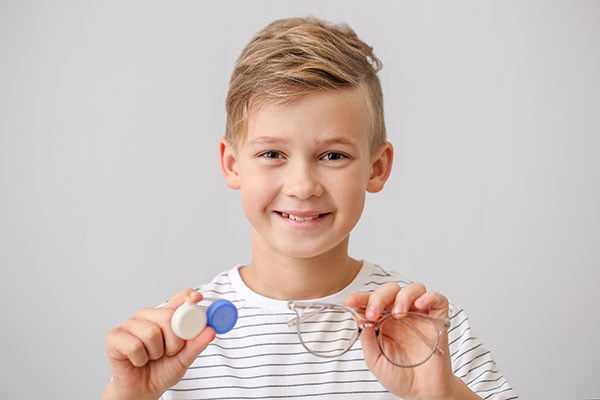

Signs Your Child May Be Nearsighted
Children do not always realize their distance vision has changed. When blur develops gradually, they may assume everyone sees the classroom board, television, or playing field the same way they do.
Parents may notice:
- Squinting to see distant objects
- Sitting unusually close to screens or the classroom board
- Complaining that faraway objects look blurry
- Frequent eye rubbing
- Headaches or tired eyes
- Repeated increases in a glasses prescription
If you are wondering why your child's vision keeps getting worse, an eye evaluation can show whether myopia is progressing and help determine if myopia management may be appropriate.
What Does Myopia Treatment Do?
Myopia treatment does not cure, remove, or reverse nearsightedness. Instead, myopia management corrects your child's vision while using treatment strategies that may help slow progression.
At our Colorado Springs location, treatment options include MiSight® 1 day contact lenses, overnight orthokeratology lenses, low-dose atropine eye drops, and Stellest® myopia-control glasses.
Your child will not need every treatment. The eye doctor considers factors such as their prescription, age, eye development, daily activities, and comfort with glasses or contact lenses before recommending an approach.
The Colorado Springs team also uses axial length measurements to track the physical length of the eye. Because myopia often progresses as the eye grows, these measurements provide useful information alongside changes in prescription.

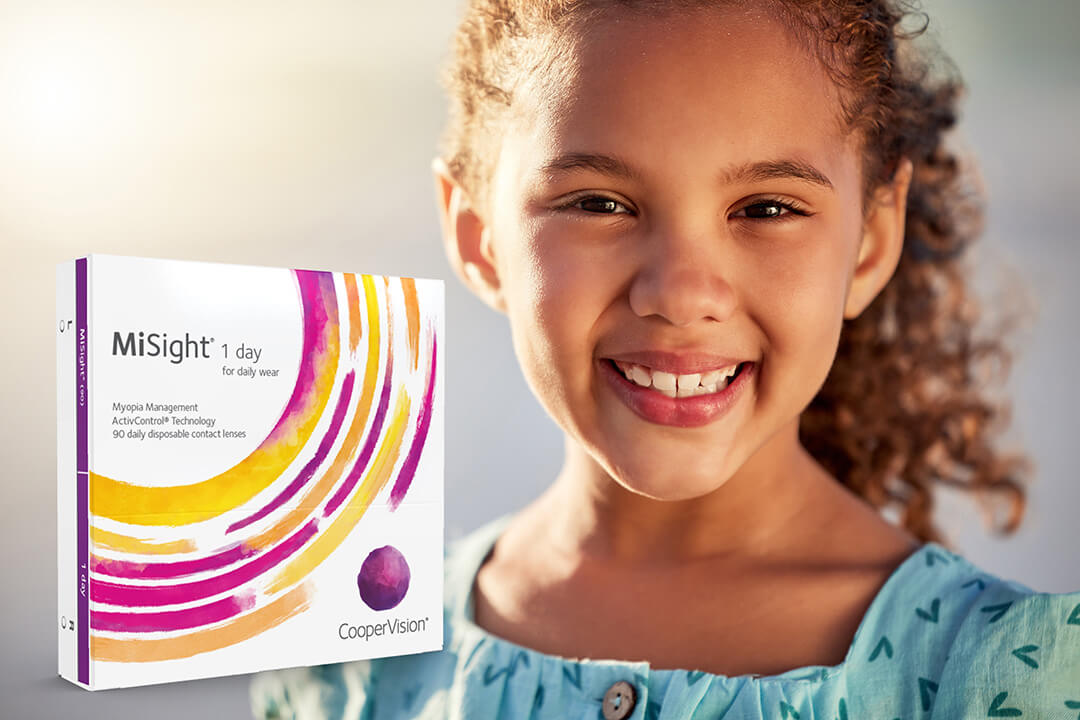

MiSight® 1 Day Contact Lenses for Children in Colorado Springs
MiSight® 1 day contact lenses correct nearsightedness while helping slow progression in eligible children. They are daily disposable soft contacts, so your child starts with a fresh pair each morning and throws them away at the end of the day.
MiSight® lenses use ActivControl® Technology, with optical zones that provide clear vision while changing how light reaches the eye. MiSight® 1 day is FDA-approved for myopia control in children who meet its prescribing criteria, including children ages 8 to 12 when treatment begins.
The daily disposable schedule also removes the need to clean and store the lenses overnight. Regular follow-up allows the doctor to monitor your child's vision, eye health, lens fit, and progression.
Stellest® Myopia-Control Glasses
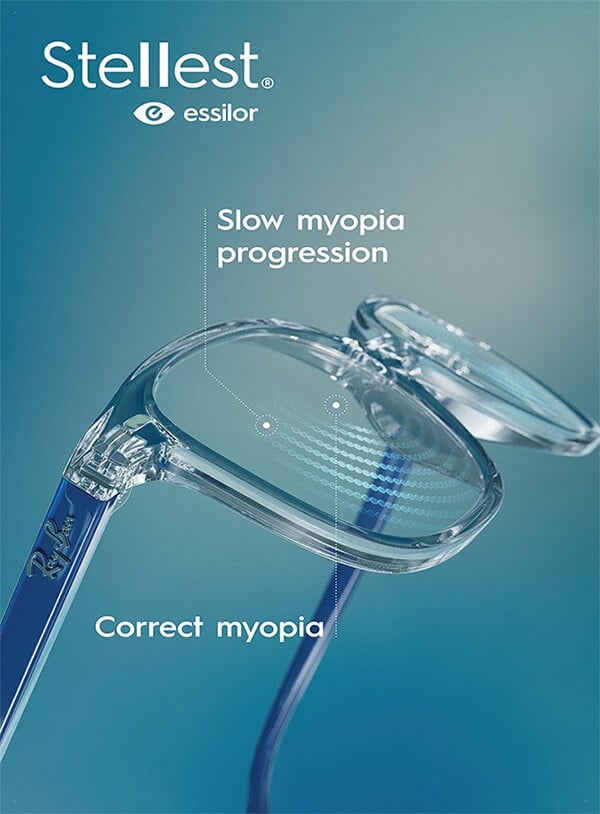
Stellest® Lenses give families a glasses-based option for myopia management. They correct blurry distance vision while using a specialized lenslet design intended to help slow progression.
For children who already feel comfortable wearing glasses or are not ready for contact lenses, Stellest® may offer a familiar way to combine everyday vision correction with myopia management.
The doctor monitors your child's prescription and eye growth as part of their ongoing care and can determine whether Stellest® Lenses fit their needs.
What is Orthokeratology for Myopia Management?
Orthokeratology, commonly called ortho-k, uses specially designed rigid contact lenses that your child wears while sleeping and removes in the morning.
The lenses gently and temporarily reshape the cornea, the clear front surface of the eye. This temporary change can correct nearsightedness so a child may spend the day without glasses or daytime contact lenses.
Ortho-k also changes how light reaches the peripheral retina, which may help slow the eye growth associated with myopia progression. Treehouse Eyes uses custom overnight KIDS Lenses and corneal mapping technology to guide their fit.
Because children wear the lenses overnight, careful cleaning and regular professional monitoring are important. If your child stops wearing ortho-k lenses, the cornea gradually returns toward its original shape and the vision correction wears off. Ortho-k does not cure or reverse myopia.
Learn more about overnight ortho-k contact lenses.
Low-Dose Atropine Eye Drops
Low-dose atropine provides a non-contact-lens treatment option for myopia management. Children use prescription eye drops according to the treatment plan recommended by their doctor.
The drops help slow progression rather than correct blurry distance vision. A child using atropine may still need glasses or contact lenses to see clearly.
The eye doctor can determine whether atropine fits your child's age, prescription, eye measurements, and overall management plan.

Myopia Care Built Around Your Child
Myopia management is an ongoing process because children's eyes continue changing as they grow.
Your child's care may include prescription testing, axial length measurements, a review of their vision history and daily habits, and scheduled follow-up visits. These appointments help the doctor track changes and assess how your child is responding over time.
Children respond differently to myopia management, so regular measurements help the doctor see how treatment is working over time.
Family history can increase a child's likelihood of developing myopia. Daily habits may also play a role, including extensive close work and limited time outdoors.
If you have noticed squinting, blurry distance vision, or repeated prescription changes, the Treehouse Eyes Myopia Risk Assessment can help you identify questions to discuss with an eye doctor.
For more information about treatment length, glasses, contact lenses, and other common parent concerns, visit the Treehouse Eyes Myopia Management FAQ.
Myopia Care for Colorado Springs Families
Ridge View Optometry provides myopia management for families in Colorado Springs and surrounding communities, including Fountain, Woodland Park, and Falcon.
If your child has trouble seeing clearly at a distance or keeps needing a stronger prescription, a myopia consultation can help you understand what is changing and which management options may suit their needs.
What Our Patients Say:


Where to Find Us
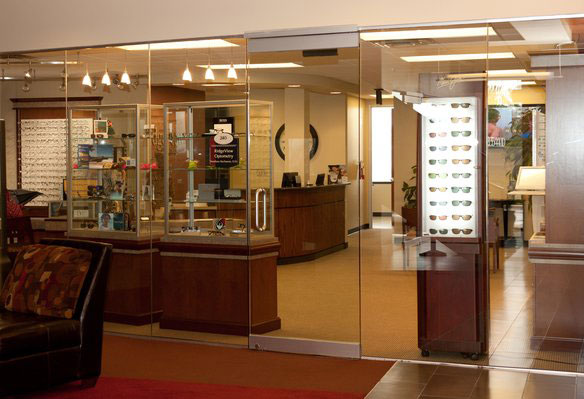
RidgeView Optometry
