

Myopia Management in Cedar Park, Texas
Helping kids see clearly and reducing their risk of serious eye diseases.
Help your child see clearly today while managing their nearsightedness as they grow.
Another stronger glasses prescription? If your child's nearsightedness keeps worsening, you may be wondering how to slow the changes.
At Lakeline Vision Source, our Treehouse Eyes partner practice in Cedar Park, we help families understand their child's nearsightedness and find treatment options that fit their child. Our goal is to slow its progression while supporting your child's everyday vision.
What Is Myopia, and How Is It Treated?
Myopia, or nearsightedness, makes distant objects look blurry while nearby objects usually remain clear. It often develops during childhood as the eye grows too long from front to back.
Glasses help your child see the classroom board clearly. Myopia management aims to slow the eye growth that worsens nearsightedness.
Slowing nearsightedness progression may lower the risk of developing high myopia, which can increase eye health risks later in life.
At Lakeline Vision Source, our Treehouse Eyes treatment options include MiSight® 1 day contact lenses, Stellest® glasses, custom soft contact lenses, overnight ortho-k lenses, and low-dose atropine eye drops.
Your child's eye doctor will consider their age, prescription, eye health, and daily activities when recommending treatment.
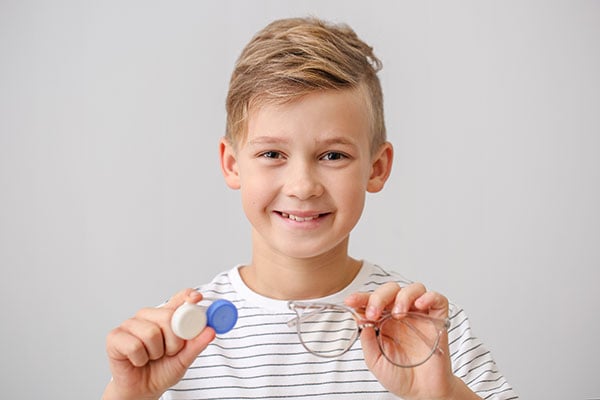

What Are the Signs of Myopia in Children?
Children don't always tell you when their distance vision becomes blurry. Often, their everyday habits offer the first clues.
Common signs of myopia in children include:
- Squinting to see distant objects
- Sitting unusually close to the television
- Holding books or screens close to their face
- Having trouble reading the board at school
- Complaining about headaches or tired eyes
- Struggling to see clearly during sports
A pediatric eye doctor can check your child's vision, identify myopia, and determine whether treatment may be appropriate.
If these signs sound familiar, a myopia consultation can help you decide what to do next.
How Does Myopia Treatment Work for Children?
Myopia treatment begins with understanding how your child's eyes are changing. Their prescription, eye growth, and daily habits all help guide the treatment plan.
Why Does My Child's Nearsightedness Keep Getting Worse?
Nearsightedness often gets worse during the school years, when children's eyes are still growing.
Family history plays a role. Children with nearsighted parents have a higher chance of developing myopia. Spending less time outdoors and doing frequent close-up activities may also contribute.
Can we prevent or reverse childhood myopia? Spending more time outdoors may help reduce the chance of developing myopia, but it doesn’t guarantee prevention. Once myopia develops, current treatments focus on slowing its progression rather than reversing it.
How Does Myopia Control Help?
Myopia control uses specially designed treatments to help slow the changes that make a child's prescription stronger.
Through Treehouse Eyes, Lakeline Vision Source offers myopia management options for children. Our eye doctors monitor prescription changes and measure eye length to track progression.
Eye length, also called axial length, is the distance from the front to the back of the eye. Tracking this measurement helps eye doctors see how the eye is growing, even when prescription changes are small.
Treatment may include specially designed glasses, myopia-control contact lenses, overnight ortho-k, or low-dose atropine eye drops.
Regular follow-up visits help your child's eye doctor check their progress and decide whether the treatment plan needs to change.


MiSight® 1 Day Contact Lenses for Children in Cedar Park
Some kids enjoy the freedom of contact lenses, especially during sports and active play. MiSight® 1 day contact lenses provide clear distance vision while helping slow the progression of myopia.
These FDA-approved soft contact lenses are for children who begin treatment between ages 8 and 12 and meet the prescribing criteria.
How Do MiSight® Contact Lenses Work?
MiSight® lenses use ActivControl® technology, which combines distance vision correction with a special optical design that helps slow myopia progression.
Children wear a fresh pair each day and throw the lenses away after use. There's no overnight cleaning or storage, although careful handling and good hygiene remain essential.
MiSight® may be an option for children who prefer contact lenses to glasses. Your child's eye doctor will check whether the lenses are suitable and teach them how to use them safely.
At Lakeline Vision Source, follow-up visits help the team check your child's vision, eye health, and response to treatment.
Stellest® Specialty Lenses
For children who prefer glasses, Stellest® lenses offer a way to manage myopia without switching to contact lenses. They correct blurry distance vision while helping slow myopia progression.
Stellest® lenses use tiny lenslets designed to slow eye growth that worsens nearsightedness.
Clinical studies have shown that Stellest® lenses can slow myopia progression in children. Results vary, and your kid's eye doctor will assess whether the lenses are suitable for their age, prescription, and eye health.
At Lakeline Vision Source, regular follow-up visits let the eye doctor review your child's prescription and eye growth and assess how well treatment is working.

What to Expect From Your Child's Myopia Care
Myopia management is an ongoing process. At Lakeline Vision Source, we track your child's prescription and eye growth to see how their eyes respond to treatment.
At follow-up visits, your child's eye doctor reviews the results, checks whether treatment is still appropriate, and explains any recommended changes.
You'll have time to ask questions and discuss your child's progress with their eye doctor.
Why Slowing Myopia Progression Matters
As nearsightedness increases, the risk of certain eye conditions can rise too. Higher levels of myopia increase the risk of conditions such as retinal detachment and myopic macular degeneration.
Research shows that certain myopia control treatments can slow the progression of nearsightedness in children.
Every child responds differently. Regular monitoring helps your child's eye doctor assess progress and decide whether treatment adjustments may help.

Is Your Child at Risk of Developing Myopia?
Myopia often runs in families, but children can develop nearsightedness even when neither parent wears glasses.
Family history, time outdoors, and frequent close-up activities may all affect a child's risk.
Our free Myopia Risk Assessment can help you learn about common risk factors and identify questions to discuss with an eye doctor.
The assessment provides general guidance. An eye doctor needs to perform an eye exam to determine whether your child has nearsightedness.
Myopia Management for Families in Cedar Park, TX
At Lakeline Vision Source in Cedar Park, families can access Treehouse Eyes myopia management close to home. As part of our pediatric eye care approach in Cedar Park, we help parents understand and manage their child's changing vision.
Families from nearby communities, including Leander, Round Rock, and Austin, can contact our Cedar Park location to ask about treatment.
Concerned about your child's changing prescription? Schedule a free virtual consultation to discuss their vision and learn about the myopia treatment options available in Cedar Park.

What Our Patients Say:


Where to Find Us
Treehouse Eyes - Cedar Park
